

The Partnership sends updates for the most important economic indicators each month. If you would like to opt-in to receive these updates, please click here.
Estimated Reading Time: 2 minutes
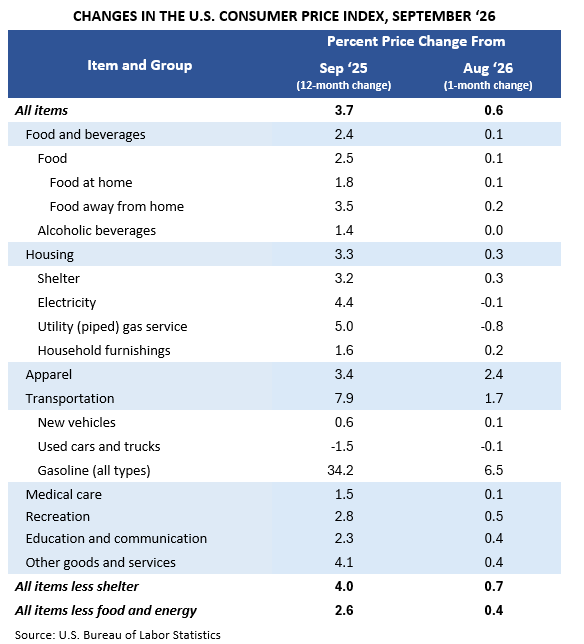
U.S. inflation heated up in September, with gasoline driving most of the shift while other prices generally rose as well. The annual inflation rate reached 3.7 percent in September, compared with 3.4 percent in each of the preceding two months. Gasoline prices, which had been declining, climbed again amid renewed conflict around the Strait of Hormuz, leaving prices at the pump 34.2 percent higher than a year earlier. Annual core inflation (excluding the volatile food and energy categories) rose to 2.6 percent in September from 2.4 percent in August.
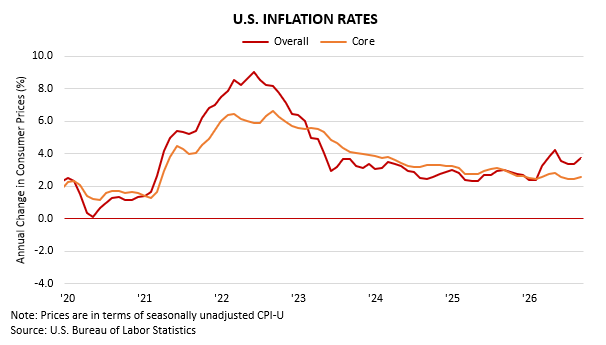
Both inflation measures came in slightly hotter than expected. Economists surveyed by The Wall Street Journal had predicted an overall rate of 3.6 percent and a core rate of 2.5 percent, each a tenth of a percentage point below the actual readings. The surprise could put additional pressure on the Federal Reserve to raise interest rates, though September’s softer-than-expected jobs report gives policymakers reason for caution. Together, these competing signals may lead the Fed to hold rates steady at its upcoming October meeting while leaving open the possibility of additional hikes later this year.
Beyond the sharp rise in energy prices, housing, restaurant meals and apparel also contributed to higher inflation, with prices in each category rising more than three percent from a year earlier. Used vehicles were one of the few bright spots for consumers, with prices falling 1.5 percent from last September.
Inflation data for June (including data for metro Houston) will be published by the Bureau of Labor Statistics on Tuesday, November 10.
Prepared by Greater Houston Partnership Research.
Colin Baker
Director of Economic Research
bakerc@houston.org