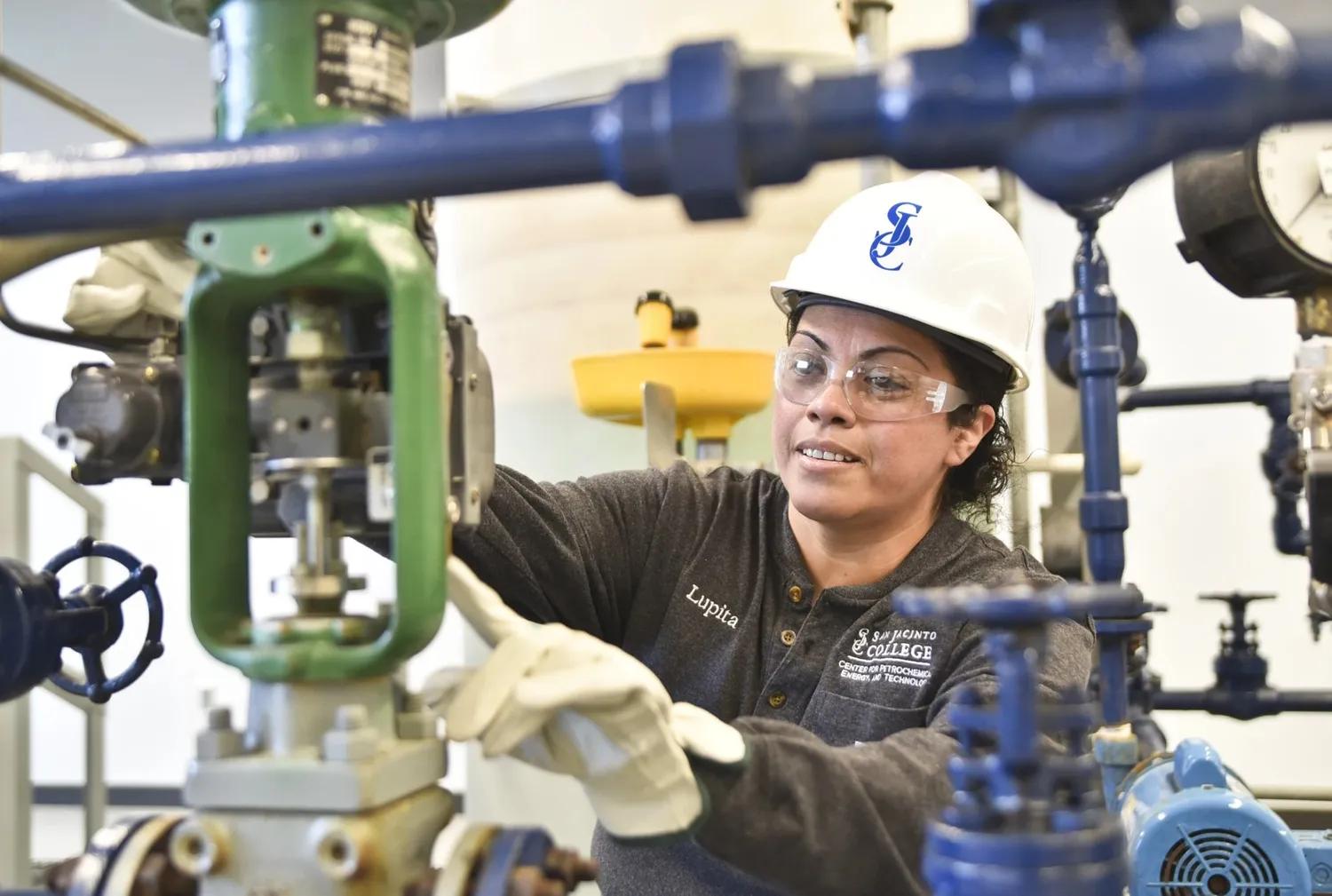
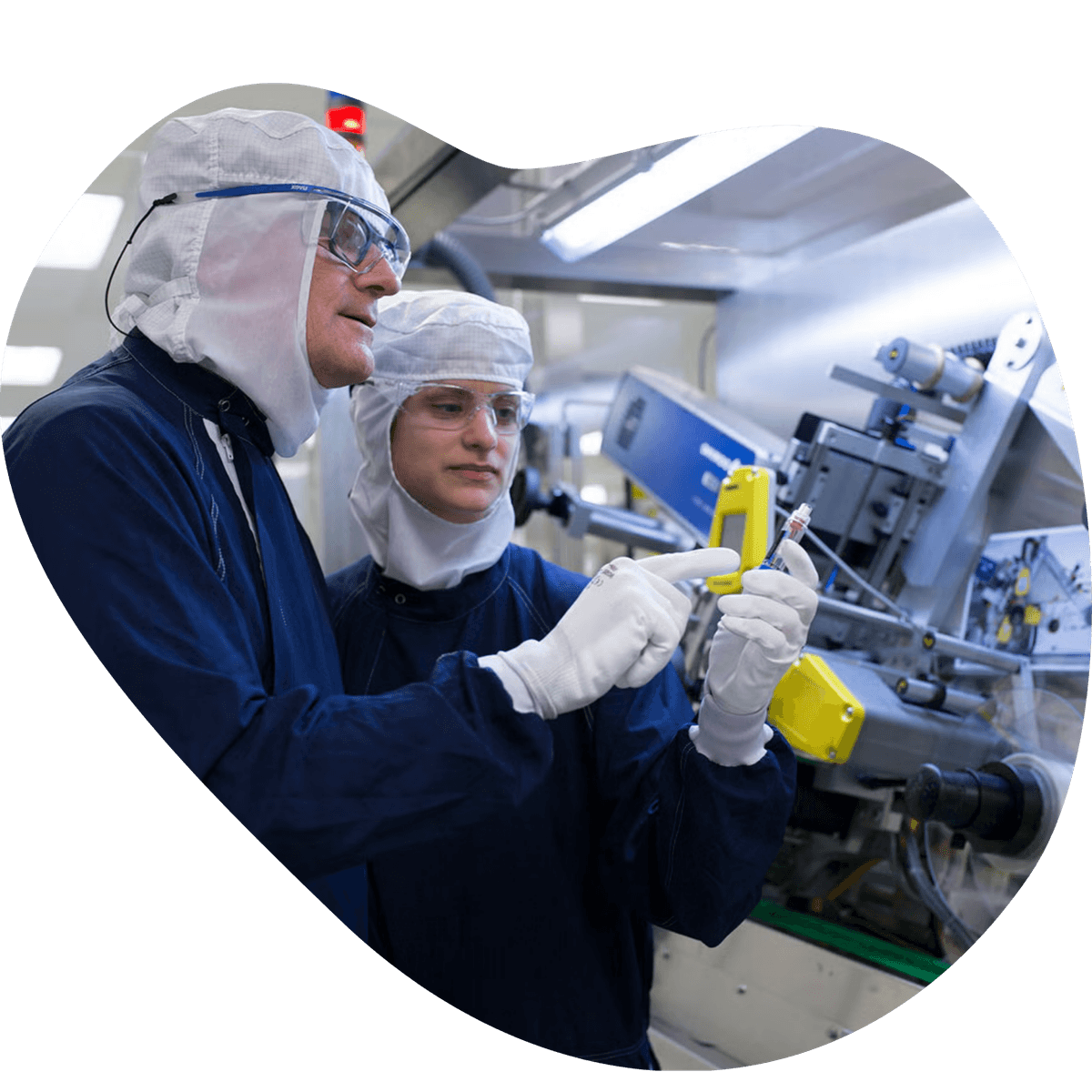
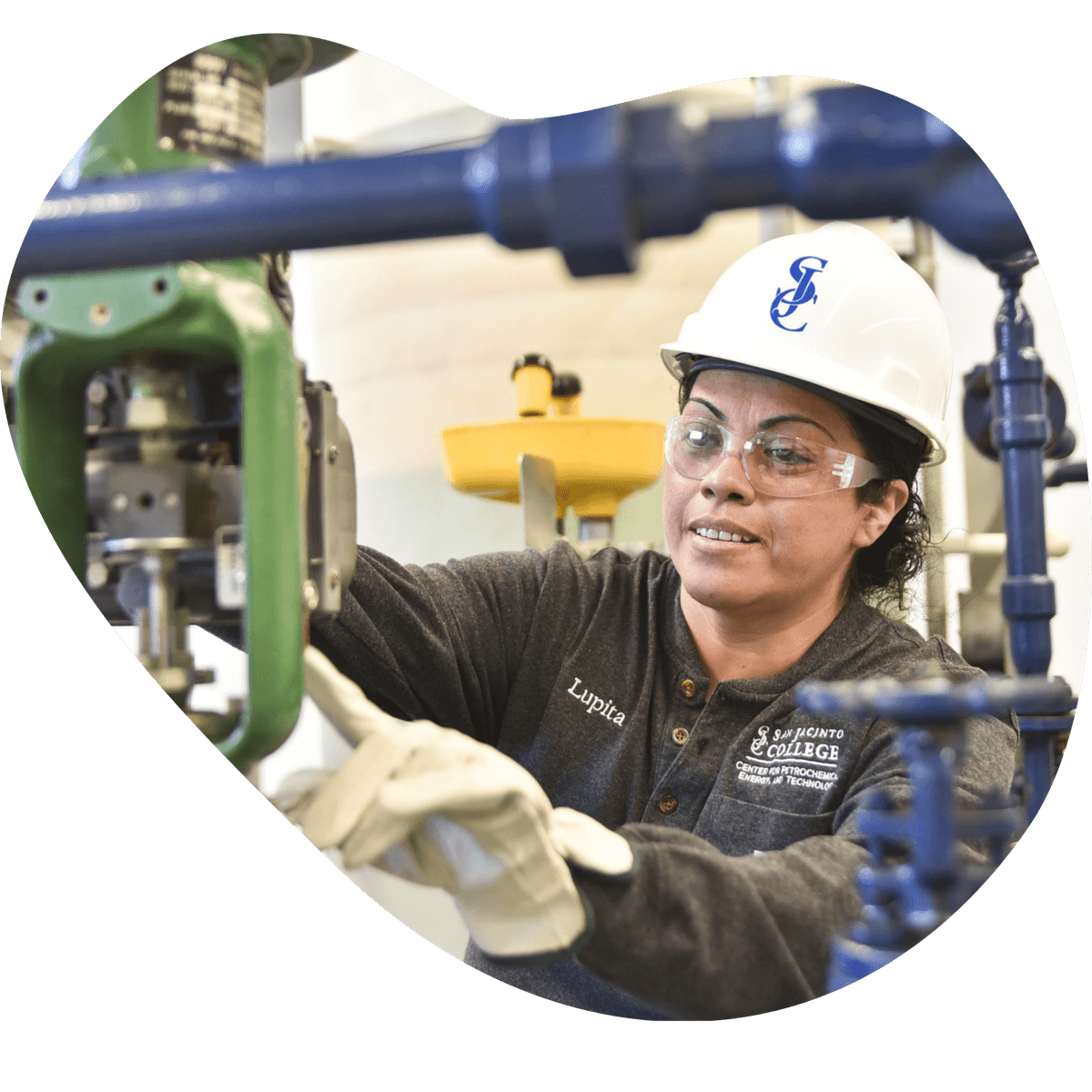
Manufacturing Employment
213,100+

Houston has one of the largest manufacturing workforces in the country

UpSkill Houston Fuels a Stronger Economy with Greater Opportunity

Employers across Greater Houston are looking to hire qualified residents for good-paying careers that require skills beyond high school, but less than a four-year college degree. Nearly 1 million such positions exist, and the number is projected to grow. Yet employers face difficulties finding workers to fill these occupations. 

Through research, analysis, and engagement with critical stakeholders, UpSkill Houston understands the barriers to attracting, training, and placing qualified workers in these careers. UpSkill Houston brings stakeholders together and helps them:

UpSkill Houston challenges employers, educators, community-based leaders, and public officials to join us in accelerated, collective action to grow the skilled workforce Houston needs to compete in the global, 21st century economy and create opportunity for all Houstonians. 

UpSkill Houston has emerged as a leader for bold change by orchestrating the direct impact necessary to create a pipeline of skilled workers for the region’s employers and better pathways to prosperity for the region’s residents. Our progress, approach, and framework have served as the inspiration or model for workforce development initiatives in Texas and across the country. Learn more here. 


Factors Affecting the Growth of a Skilled Workforce

Employers across Greater Houston are looking to hire qualified area residents for good paying, rewarding careers that require skills beyond high school, but less than a four-year college degree. Of the more than 3.1 million workers in Greater Houston, more than 920,000 or 30 percent are employed in occupations meeting these criteria. The region’s recent overall rapid job growth included meaningful growth in these occupations, and this trend is expected to continue over the next five years.

Yet employers are facing difficulties finding workers with the skills and education to fill these positions. There is a strong push for students to pursue four-year college degrees. Certain industries struggle with outdated perceptions about their work. Effective career guidance for these careers is lacking. Also, current workers who are unemployed or under-employed face multiple challenges as they seek to upskill and reskill into these occupations.

Further, Houston’s economy and industries are being reshaped by technology and other global forces at a more rapid pace than ever before, impacting talent needs. As technology affects all jobs — creating new ones, augmenting others, and automating some — digital skills will increasingly be a requirement in all occupations. In addition, employers are placing a premium on soft and noncognitive skills.

Upcoming Event

UpSkill Houston Facilitates Workforce Conversations

UpSkill Houston launched its UpSkill Works Forum Series to foster workforce development discussions and actions across greater Houston’s employer, education and non-profit communities by presenting conversations with regional business, education and community leaders, policy makers and high-profile thought leaders on the key workforce issues the greater Houston region confronts. The series supports and advances the initiative’s work to help employers identify the key skills they need for workers to be successful, provide relevant information about careers and pathways, and drive effective career guidance.

UpSkill Houston Unites Partners to Overcome Barriers

The Greater Houston Partnership believes that broad and meaningful employer leadership is necessary to bridge the divide between employers’ demands and workforce needs. The Partnership committed to address the region’s skills gap by establishing the UpSkill Houston initiative to help employers find the right talent when and where they are needed and to help individuals gain the right skills and credentials to access the good jobs employers offer. 

Since 2014, UpSkill Houston has mobilized leaders from more than 200 prominent businesses, K-12 districts, community colleges, community-based organizations, and public agencies to work collectively to understand — and overcome — the barriers to attracting, training, placing, and growing qualified workers in good careers that are vital to the region’s global competitiveness.

Already UpSkill Houston and its partners have demonstrated how, working collectively, they can prepare incoming workers for good careers in vital industries, reskill incumbent workers for changing occupations, create shared prosperity for area families, and enable high-demand industries to thrive. 

Examples of efforts by UpSkill Houston and it partners to address talent pipeline challenges, include: 

ATTRACT: Working initially with partners in the construction, health science, petrochemical, and transportation industries, UpSkill Houston has created a series of videos and resources that showcase for students, parents, and workers seeking new opportunities a variety of good careers that don’t require a four-year college degree. The videos are available at UpSkillMyLife.org. 

TRAIN: MAREK recently partnered with Houston Independent School District and Houston Community College (HCC) to enable high school students to earn industry-recognized Level 1 certificates from HCC and drywall credentials through work experience at MAREK by the time they graduate with their high school diplomas. MAREK’s pre-apprenticeship program is patterned after a similar program developed by TRIO Electric with HCC and Spring Branch Independent School District. 

PLACE:  Since its founding in 2014, NextOp has placed approximately 2,100 “middle-enlisted” veterans — most without a four-year college degree — in meaningful careers, by connecting employers’ need for job-ready candidates with service members’ ability to succeed at a different mission, with different resources. NextOp helps employers recognize veterans’ talents and notice them in a candidate pool, while coaching veterans to describe their skills in a way employers value. 


UpSkill Houston and its partners have built a strong foundation, yet there is more work to be done. We need employers to articulate, with a collective voice, the skills and competencies they need in their workers. We need educational partners to adapt and improve curricula and prepare students for the good jobs that don’t require four years of college. We need community-based organizations to continuously improve their programs that prepare their clients for these good jobs.
Through UpSkill Houston programs, regional leaders share ideas with national thought leaders, such as Joseph B. Fuller, Harvard Business School professor and co-director of the school’s Managing the Future of Work project.

“We all go to lots of meetings where we talk about what needs to be fixed but rarely do individuals own the work to make something happen. It’s very impressive how UpSkill Houston has been able to bring everyone together to accomplish common goals.”


Linda Aldred
Texas Children’s Hospital

“The minute I heard there was an opportunity to leverage what the Greater Houston Partnership was doing to make our industry better and our company better, joining UpSkill Houston was a no-brainer.”


Daniel M. Gilbane
Gilbane Building Co.

“I am sitting in Alief Independent School District watching my students' lives change because of efforts like this.”


HD Chambers
Alief Independent School District

“UpSkill Houston helped us build relationships across sectors and made sure we were all talking about the same issues.”


Brenda Hellyer
San Jacinto Community College

Continued National Acclaim for UpSkill Houston

UpSkill Houston has been cited as an exemplar by the U.S. Chamber of Commerce Foundation's Talent Pipeline Management Initiative, the Communities that Work Partnership of the U.S. Department of Commerce and the Aspen Institute, the Global Cities Initiative of the Brookings Institution and JP Morgan Chase, and United Way Worldwide. UpSkill Houston has hosted business and community leaders from Phoenix; Detroit; Tampa Bay, Fla.; and Buffalo-Niagara, NY to learn about our employer-led approach. Our work has been featured in The Houston ChronicleHouston Business JournalForbesThe Hill, and U.S. News & World Report. Our partners have received extensive coverage for their workforce development and educational advancement efforts from local and national press.

Recent News

Construction

The Apprenticeship: An Underutilized Tool for Employers in an Uncertain World

6/28/21
Following the adage ‘measure twice and cut once’ helps avoid the need to rework a project. In many cases, employers outsource their skills training to the education sector and hope for skilled talent to show up at the front door ready to work – only to find themselves needing to retrain individuals. Employers who utilize apprenticeship models, which blend education with paid work and mentorship, are building an entry-level workforce with the job-related and so-called “soft” skills they need; these employers are developing talent to their unique specifications and are seeing a return on their investment. Apprenticeships in the United States are widely associated with trade and craft occupations including carpenters, pipefitters, and industrial machinery mechanics. The work-based-learning apprenticeship model, however, is an underutilized tool in other industries and can lend itself well to a much broader scope of job roles (e.g., customer service representatives, human resource specialists, medical transcriptionist, insurance underwriters, and sales representatives), while closing skills gaps and creating economic opportunity and mobility. Research conducted by Harvard Business School’s Managing the Future of Work project and Burning Glass Technologies and presented in the paper “Room to Grow: Identifying New Frontiers for Apprenticeships” explores the scope of potential for apprenticeships in the economy, revealing great opportunities for expanding and boosting the model to new industries and occupations. Houston’s employers can derive great benefit from working together to increase the use of apprenticeships in the region and support a more resilient recovery from the COVID-19 pandemic and economic downturn. Through apprenticeships, employers can build the skilled workers they need while fostering a stream of talent for the future with multiple business, social, and economic benefits. “You’re cultivating human assets of the future. Treat [your apprenticeship program] like an asset, invest in it, install it, understand how to work with it. Don't treat it like an expense,” Harvard Business School professor and co-leader of the Managing the Future of Work project Joseph B. Fuller said during an UpSkill Houston initiative UpSkill Works Forum conversation with Mary Beth Gracy, office managing director of professional services company Accenture.   Building future talent through apprenticeships The general population tends to stigmatize or downplay jobs associated with apprenticeships because they do not require a bachelor’s degree; however, these jobs are critical to employers, and they pay a living wage. Employers who have specifically built apprenticeships develop a pipeline of highly skilled talent to meet business and industry needs. Dow is a major employer that cultivates talent for some of the most sought-after technical specialties in the industry through its robust U.S. apprenticeship program blending formal education and paid on-the-job training. Dow partners with local community colleges, including Brazosport College, locally, where apprentices receive classroom instruction and in-depth, hands-on training as they work toward earning an associate degree. Dow’s apprenticeships are certified with the U.S. Department of Labor, so individuals who complete programs become certified apprentices at the national level, meaning that their work and accomplishments would be recognized by employers beyond the company, Rich Wells, a vice president at Dow, explains in a program introduction. “This is not an alternative to college, but rather a pathway to a debt-free associate degree and ultimately a robust career,” Wells says. Fuller noted during the Forum that the work experience an apprentice gains can be invaluable for the apprentice but also even to an employer that did not sponsor the apprenticeship program. Employers can feel more confident in hiring a candidate who can show real job exposure over a candidate who cannot, he said. Apprenticeships give employers a greater opportunity to assess a worker’s job skills and ability to learn than does a job interview, allowing employers to “test” a potential employee before hiring them for a full-time job – generally at a lower cost than hiring first and “testing” second. What’s more, Fuller said, apprentices are productive, and employers benefit from their work. Historically, in Europe, apprentices have been safe from workforce reductions because they represent a good return on investment, he said. Employers have used apprenticeships effectively to boost diversity and expand underrepresented populations in their workforce, including women, veterans, and second chance jobseekers; one recent example is S&B Engineers and Constructors’ initiative to bring more women into skilled craft professions. “Companies with apprenticeship programs very often report higher levels of engagement by their incumbent staff because they see that investments are being made in trying to both bring in young talent, but also to lift people up, and that's motivating for anyone to see,” Fuller said.   Recognizing potential for apprenticeship programs Research conducted by Harvard and Burning Glass Technologies identified 27 jobs in the United States that are strongly influenced by apprenticeship programs, mainly in the construction and mining industries, but an additional 47 jobs – for a total of 74 – that have the potential to be effectively staffed through an apprenticeship model. These occupations require clearly defined hard, job-related skills that can be taught through specialized training and are generally jobs that are not heavily licensed – requirements for state licensure can limit a worker’s geographic mobility. The positions identified by Harvard and Burning Glass tend to have lower-than-average turnover – potentially making the return on investment through an apprenticeship more attractive to an employer – and pay a living wage of $15 per hour or more. Nearly half of these jobs require skills that can be learned without a bachelor’s degree; this set includes customer service representatives, tax preparers, and photovoltaic installers. And many of them are hard to fill, meaning employers could benefit from developing a pipeline of talent ready for hire. For the rest, a bachelor’s degree is usually requested or preferred among job candidates though the general skills utilized on the job do not differ significantly between postings that require a bachelor’s degree and those that do not. This also suggests overall that these skills could be learned through an apprenticeship approach in contrast to requiring a bachelor’s degree and the wage premium an employer may pay. This group includes insurance underwriters, database administrators, and human resource specialists. Many of the 74 jobs where apprenticeships are prevalent or that represent potential for apprenticeship expansion are among the nearly 50 “middle-skill” occupations within greater Houston’s economy with projected high-demand, high-volume need in the coming years identified in UpSkill Houston’s 2020 “Middle Skills Matter to Greater Houston” report.   New network supports Houston apprenticeship programs Organizations ready to start apprenticeship programs can find support from the Greater Houston Apprentice Network (GHAN), a coalition of Houston employers, educators and non-profits powered by Accenture and Aon. Using education and non-profit relationships and an apprenticeship playbook, this network, which includes the Greater Houston Partnership, will help organizations define visions for their programs, identify best-fit roles for apprenticeships within their organizations, and develop and execute their program models. “Apprenticeships are a tried-and-true model that is scalable for any organization,” Dawn Spreeman-Heine, a Managing Director of Corporate Risk Solutions at Aon’s Houston office, said during the Forum. “You really don't have to start from scratch.”   The GHAN will hold an official launch event and information session in August 2021 featuring employers who have launched successful apprenticeship programs, apprentices, and workforce development leaders. UpSkill Houston is the Partnership’s nationally recognized, employer-led initiative that mobilizes the collective action of employers, educators, and community-based leaders to strengthen the talent pipeline the region’s employers need to grow their businesses and to help all Houstonians develop relevant skills and connect to good careers that increase their economic opportunity and mobility. Its “My Life As…” career awareness series features stories shared by apprentices in construction and petrochemical manufacturing fields at TRIO Electric, Dow and INEOS. See them here. See all previous UpSkill Works forums here.
Read More
Economic Development

Texas Sets Stage for Education, Economic Success

6/21/21
State lawmakers have handed business and industry leaders a future-focused win. By aligning the work of the state’s three major education and workforce bodies, Texas and Texans are now set up for better workforce development outcomes and long-term economic success.  In signing the Texas Education and Workforce Alignment Act in June, building upon the Tri-Agency Workforce Initiative, Gov. Greg Abbott has formalized existing cooperative efforts between the Texas Education Agency (TEA), Texas Higher Education Coordinating Board (THECB), and Texas Workforce Commission (TWC) to develop a robust, accurate, and timely labor market infrastructure that supports planning, improves performance, and assists individuals and employers with navigating the changing nature of work.  This boon to employers, educators, and workforce development practitioners across the state – and by extension, students and job seekers – comes amid an uneven recovery from the economic crisis driven by the COVID-19 pandemic and the acceleration of a fundamental shift toward technology-enabled, innovation-based economies already underway in Houston and across Texas. Creating a formal, coordinated infrastructure will optimize resources and drive performance across TEA, THECB, and TWC. It will provide a framework for establishing state workforce development goals developed in consultation with employers, including employment targets for jobs that pay a self-sufficient wage for all career education and training programs within the state, as well as the capabilities to measure and improve them. It will also support the development of a unified workforce data repository with publicly available resources and tools to identify and analyze key education and workforce movement and trends. The established structure makes employer insights into current and projected demand for specific roles and job types – along with specific skills and skills areas they will need workers to have – central to the development of workforce goals. Education systems and training providers in greater Houston and across the state will be able to use aggregated industry data to align their programs with real and real-time workforce needs to ensure program participants can earn the right industry certification and credentials and develop relevant essential (soft), digital, and technical skills.  The initiative will also collect data marking the progress toward accomplishing established workforce development goals disaggregated by public schools and higher education campuses, workforce regions and counties. Education systems, training providers and others will be able to use this data to identify effective programs and learn best practices.  These provisions will help educators and workforce development practitioners build a workforce Texas and its regional economies needed to grow and compete globally. In turn, this will ensure individual prosperity and economic mobility.  Companion bills to formalize the Tri-Agency Workforce Initiative were introduced by Houston-based Republicans State Sen. Paul Bettencourt and State Rep. Jim Murphy and moved through their respective chambers during the 87th Legislative Session with strong bi-partisan support. This legislation builds upon workforce development efforts made in 2019 to increase collaboration between business, higher education and government. This effort heightened awareness of the vital role of business leaders and employers have in the workforce development conversation and in building skilled talent fit for the future. UpSkill Houston is the Partnership’s nationally recognized, employer-led initiative that mobilizes the collective action of employers, educators and community-based leaders to strengthen the talent pipeline of skilled workers employers need and to create better pathways to opportunity and prosperity for all Houstonians. Learn how.  
Read More
Economic Development

'Just-In-Time' Hiring a Luxury of the Past in Post-Pandemic Economy

5/25/21
Gone is the luxury of "just-in-time hiring" and hoping to find talent for immediate needs, according to Tamla Oates-Forney, senior vice president and chief people officer for Fortune 500 company Waste Management.  “We have to be more intentional about determining what we’re going to need and when we’re going to need it, when we need to hire, and the skills we need to develop,” she said during a Partnership Restart Houston event focused on upskilling and reskilling the region’s workforce for the post-pandemic economy. Louise Wiggins, Boston Consulting Group (BCG) partner and managing director, joined Oates-Forney in the conversation, moderated by Peter Beard, Partnership senior vice president of regional workforce development and leader of its UpSkill Houston initiative. Wiggins presented three trends emerging from the ongoing digital transformation of work and reactions to the COVID-19 pandemic with big implications for businesses and organizations large and small: Skills are becoming obsolete more quickly, requiring individuals to re-invent themselves by obtaining new skills. The growing integration of automation and AI is changing what jobs are needed and how those jobs are done. The pace of change has accelerated, making it harder to predict what jobs will be in demand in the future. These trends mean companies must strategically and proactively prepare for an unknown future by focusing on upskilling employees for expanded career pathways and by reconsidering their value propositions. The Partnership’s UpSkill Houston initiative can help employers work together and strengthen talent pipelines for their industries and businesses. Prepare for Diminishing “Half-Life” of Skills The introduction of personal computers and other subsequent technologies during the digital age rapidly accelerated the rate at which some skills, linked to outdated technologies, became obsolete and needed to be replaced. The pandemic quickened the pace.  As Wiggins explained, this “half-life” of skills decreased from 10 years in the 1960’s to two-and-a-half to five years today. Now, working individuals will have to develop new skills and capabilities or “re-invent” themselves three or four times over a career, she said.  But workers are willing to learn.  Findings from a new study from BCG and the corporate online recruiting alliance The Network, include that more than two of every three workers globally are willing to retrain for new jobs, and this willingness is not limited to particular industries or job types. The pandemic emerged amid concerns among workers across industries, job fields and geographies of being replaced by technology; the study shows that anxiety has grown for more than 40 percent of workers globally. More than 70 percent of workers in job roles that faced the greatest risk of replacement – and that felt the worst displacement due to COVID-19 – indicated a willingness to retrain. (UpSkill Houston’s “Navigating the Changing Nature of Work” report discusses this risk within the greater Houston region.) Oates-Forney described how the pandemic-driven adoption of digital technologies are playing out across Waste Management. Distancing rules altered the way drivers clocked in and out; they no longer line up to use a time clock but instead track their time using mobile devices (and learned how to do so), she said. The company evaluated whether jobs could be conducted remotely, in the office or through a hybrid model and some, such as customer service roles, were shifted to remote-only, generating the need for new tools and systems to assess productivity, Oates-Forney said. Waste Management proactively considers the skills it needs within its workforce and approaches career development in terms of movement through a lattice rather than up a ladder. It supports building transferrable skills for broad movement versus "deep domain" building to facilitate progression in one area, Oates-Forney said. It recently partnered with Guild Education to help manage education assistance benefits programs for employees, and partners with community-based organizations to provide supports and wraparound services employees may need to achieve success. Though Guild Education, which focuses its work on frontline workers of Fortune 500 companies, can be a good solution for building skills development programs at scale, companies can also look to community colleges, online courses and community partners to build training and development programs. Reconsider the Value Proposition Focusing on workforce skills, education and support like childcare assistance can help companies offer a strong value proposition to prospective and incumbent workers in competitive labor markets, such as Wiggins described in sectors that experienced high worker layoffs and furloughs at the start of the pandemic but are now trying to reopen. Employers will need to highlight what makes them different and emphasize how a lower wage role is part of a pathway to something bigger, she said. Waste Management’s approach to mobility through career lattices is one example; extending education benefits to employees – and to their families – is another. Additionally, these emphases will help companies drive an equitable recovery, as the pandemic disproportionately sidelined women, Hispanic and Black workers, and workers with less education than a bachelor’s degree.    The pandemic has also pushed managers to lead with more humility, transparency, and compassion. “The past year has accelerated and amplified so many needs in terms of reskilling and upskilling and provided resources and funding [to support them].” Wiggins said. “The other thing that it's taught us is to have compassion for one another and to bring compassion into the workplace.”   To view a recording of this presentation, members can log into the Membership Portal at the top right of this screen. To learn more about membership with the Greater Houston Partnership click here or contact membership@houston.org.  The Partnership’s UpSkill Houston initiative works to strengthen the talent pipeline employers need to grow their businesses and to help all Houstonians build relevant skills and connect to good careers that increase their economic opportunity and mobility. Learn how.  
Read More
Executive Committee
Sector Leadership
UpSkill Houston Team

UpSkillHouston.org

Career information for job seekers, educators and partners.

Learn More

UpSkillMyLife.org

Video series introducing careers and the pathways to entry.

Learn More

PetrochemWorks.com

Tool to match skills with careers in the petrochemical manufacturing industry

Learn More

Major Funding Partners

Additional Resources

Find reports and other information and resources tied to UpSkill Houston. 

This report highlights the disruption that greater automation and increased requirements for digital skills is causing for regional workers and the importance of helping workers build digital skills and identify career progressions for occupations that can lead to economic opportunity.

A recent labor market report underscores the long-term and critical role of middle-skill occupations in positioning the Houston region to be competitive in the 21st century and creating economic opportunity for its residents.

This series presents conversations with business and community leaders, policy makers, and leading thinkers on the key workforce issues confronting the Greater Houston region.

Business, education, and community organization leaders highlight how participating in the Greater Houston Partnership's UpSkill Houston initiative has strengthened workforce development efforts through collaborative action.

This labor market study highlights the prevalence and growth of middle-skill jobs within Greater Houston’s economy and analyzes how automation and increased digital skills are transforming the nature of work.

This video from the U.S. Chamber of Commerce Foundation shows how UpSkill is leading the way to close the skills gap using lessons learned in supply chain management.

UpSkill Houston's "My Life As" campaign provides stories of workers in high demand, growth opportunity careers.

By contributing to the Employer Champion Campaign, companies are setting Houston on a better path and improving the skilled workforce and economy for generations to come.

A comprehensive look at the work and results of UpSkill Houston.

Get Involved Today by Filling Out the Form Below
Greater Houston Partnership member
Reasons for interest in UpSkill Houston (check all that apply)
Your role within the company

View Past Editions of the UpSkill Update Newsletter

MAY
2021
How employers will view talent and skills in post-pandemic economy; Plus UpSkill Works Forum returns
View
APR
2021
Employment recovery; Secrets to Starting your career right revealed
View
MAR
2021
Unemployment revisited; Legislative update; Employer-education partnerships
View
FEB
2021
Texas plans recovery efforts, builds workforce strategies
View
JAN
2021
Economic recovery underscores urgency in upskilling
View
NOV
2020
Spotlight on higher ed, adult learners
View
OCT
2020
Re-imagining career-relevant education; Student awareness of good careers
View
SEP
2020
COVID-19 & innovation in career exploration; Talent Finance initiative
View
AUG
2020
New "My Life As..." career stories; Houston expands digital alliance; talent finance discussions
View
JUL
2020
Navigating the changing nature of work; Reskilling through higher ed
View
JUN
2020
COVID-19 impact on Houston’s workforce; HCC unveils job-connected training portal
View
MAY
2020
COVID-19 presents short-term problems, long-term opportunities; New funding for workforce development announced
View
APR
2020
UpSkill Houston partners on animated soft skill series
View
MAR
2020
COVID-19 and workforce disruption
View
FEB
2020
Career coaching outcomes examined; Transportation leaders eye education programs
View
JAN
2020
Putting talent first and making Houston a great global city; Connecting with jobseekers
View
DEC
2019
UpSkill Houston drives action, looks ahead to the future
View
NOV
2019
UpSkill benefits from elite fellowship program
View
OCT
2019
Embracing change to create a competitive edge; Leadership reviews new 5-year plan
View
Executive Partners