The Partnership sends updates for the most important economic indicators each month. If you would like to opt-in to receive these updates, please click here.
Estimated Reading Time: 2 minutes
Inflation in metro Houston fell sharply in June, driven by a steep drop in fuel prices. The local annual inflation rate declined from 2.8 percent in April to 0.8 percent, its lowest level in nearly six years. National inflation eased more modestly, from 3.8 percent to 3.5 percent over the same period. The decline in June followed a sharp pullback in global oil prices, as tensions over the Strait of Hormuz showed some signs of easing. But renewed conflict in recent weeks may complicate the picture in the months ahead.
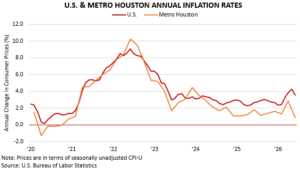
At 3.5 percent, U.S. inflation came in below the 3.8 percent expected by economists in a Wall Street Journal survey. The softer reading reduced the likelihood that the Federal Reserve will hike interest rates in the near term, though with inflation remaining above the Fed’s two percent target, rate cuts also seem unlikely.
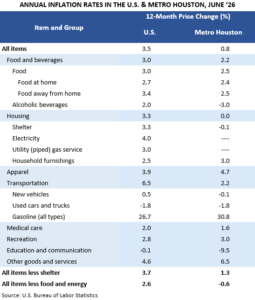
While local gasoline prices are 5.2 percent lower than they were in April, they remain 30.8 percent higher than their level a year ago. Housing-related costs, including homeownership, rent and utilities, were flat locally but continued to rise nationwide. Food and medical care costs also increased more slowly in Houston. By contrast, apparel and other goods and services rose faster than the national average.
The next release of CPI data will be on Wednesday, August 12.
Colin Baker
Manager of Economic Research
bakerc@houston.org